
The Camino Olvidado “Forgotten Way” is one of the routes of the Camino de Santiago, or the “Way of St James”. It is a 637km long (approx 22 days walking) and begins in Bilbao, travels west to Villafranca del Bierzo in León and then joins the French Way to Santiago de Compostela. It is one of the earliest Jacobean routes on record.
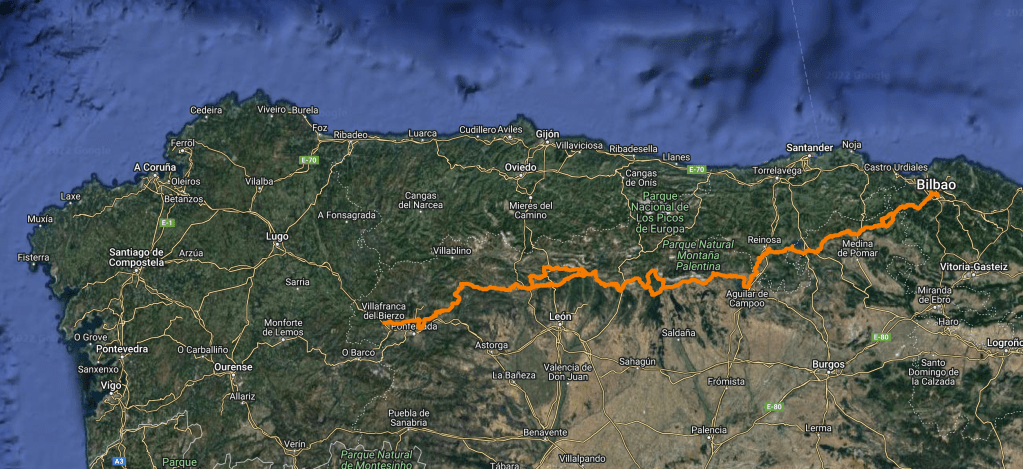
Though not as well known as the French Way or the Northern Way, the Camino Olvidado is attracting more and more pilgrims as many of the trails become busier. Those who are looking for a more untrodden, tranquil experience walk the Camino Olvidado and there has been an 165% increase in pilgrims this year compared to the previous year.
The Camino Olvidado begins in Basque Country and passes through Burgos where you will walk through amazing forests and waterfalls. In Palencia you pass through impressive Romanesque churches that sheltered pilgrims of the past. Then in Leon you will pass through more beautiful landscape and several national parks. The route continues through tranquil valleys to reach the stunning region of El Bierzo and the town of Villafranca, known as the ‘French village” due to the influx of French pilgrims who visited the Cluniac monastery here in the late 11th century. From here it joins the French way to Santiago de Compostela.
The Camino Olvidado is a unique and challenging walking route, rich with history and natural beauty.
Here in Zalla we privileged to be on the first stop of the Camino Olvidado from Bilbao and to be the first dedicated pilgrim hostel in the area. Casa Camino Antiguo aims to be a place of welcoming respite and hospitality for pilgrims walking the Camino Olvidado.
The Camino Olvidado on facebook
The Camino Olvidado Website with maps, accommodation and information
Etapas of the Camino Olvidado:
- Bilbao – Gueñes 25 Km.
- Gueñes – Nava de Ordunte 26 Km.
- Nava de Ordunte – Espinosa de Los Monteros 35 Km.
- Espinosa de Los Monteros – Pedrosa de Valdeporres 31 Km.
- Pedrosa de Valdeporres – Arija 28 Km.
- Arija – Olea 33 Km.
- Olea- Aguilar de Campoo 29 Km.
- Aguiar de Campoo – Cervera de Pisuerga 30 Km.
- Cervera de Pisuerga – Guardo 38 Km.
- Guardo – Puente Almuhey 15,3 Km.
- Puente Almuhey – Cistierna 18,5 Km.
- Cistierna – Boñar 21,3 Km
- Boñar – La Robla 27 Km.
- La Robla – La Magdalena 16 Km.
- La Magdalena – Riello 14 Km . por el monte.
- Riello – Fasgar 28,3 Km.
- Fasgar – Igueña 19 Km.
- Igueña – Labaniego 19 Km.
- Labaniego – Congosto 18,5 Km.
- Congosto – Cabañas Raras 22,1 Km.
- Cabañas Raras – Villafranca del Bierzo 16,1 Km.
General information on the Camino de Santiago
The Camino de Santiago is made up of many routes which all lead to one place, Santiago de Compostela in west Spain. It is one of oldest Christian pilgrimages in Europe, dating back to 812. For centuries, pilgrims have walked the different routes of the Camino to pay homage to the apostle St James whose remains are said to buried in Santiago de Compostela. Historically, walking the Camino was a physical test and demonstration of devotion.
Today, thousands of people decide to walk the Camino, each for their own different reasons. They are just ordinary people who become pilgrims as they are all headed towards the same destination, Santiago, where they can receive their Compostela. They take time out of their ordinary lives to enjoy the beautiful Spanish landscape, to get away from the rat race, to discover themselves and to discover God. Around 45% of pilgrims say they are doing the Camino for religious or spiritual reasons.
 Casa Camino Antiguo